Repair assembly tools and equipment for industry
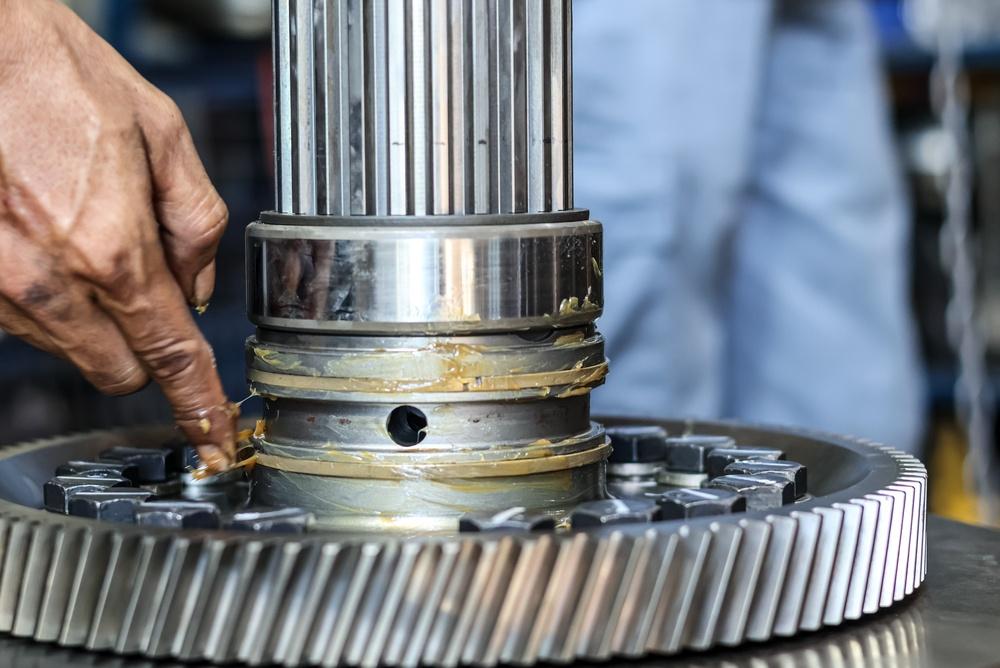
Industrial production depends on tools that perform consistently, safely, and with the accuracy required by modern assembly operations. When tightening tools, dispensing systems, fastening equipment, controllers, batteries, cords, motors, or related components begin to show signs of wear, the issue is rarely limited to one workstation. A faulty tool can slow down production, affect quality, increase rework, and create uncertainty across the entire process. That is why professional repair of assembly tools and equipment should be treated as a strategic part of industrial maintenance, not only as a reaction when something stops working.
Why professional repair matters in industrial assembly
In demanding production environments, repair quality has a direct impact on output, traceability, operator confidence, and long-term tool performance. If a tool shows battery problems, motor malfunctions, damaged cords, irregular behavior, overheating, or a burning smell, it should not be left to chance. For companies that need guidance on repairs, service processes, and industrial assembly support, here you can find help from a specialist repair service focused on assembly tools and equipment.
Assembly tools are precision assets. They are often used repeatedly throughout the day and expected to deliver controlled results across thousands of cycles. A repair that only addresses the visible fault may not be enough if the underlying cause is not properly diagnosed. In industrial tightening, fastening, riveting, dispensing, and material handling applications, small variations can affect product quality and process reliability.
For many manufacturers, the cost of downtime can be more significant than the cost of the repair itself. A tool that is unavailable at the wrong moment can affect line balance, delay deliveries, and place extra pressure on maintenance teams. Repair planning should therefore be connected to productivity goals. The question is not only how quickly a tool can be fixed, but how reliably it can be returned to service.
The value of OEM knowledge and genuine spare parts
One of the strongest reasons to use a specialist repair partner is product knowledge. Assembly tools and industrial equipment are built with specific mechanical, electronic, and software-related requirements. The people who design, manufacture, and service these products understand how the components interact and what standards the tool must meet after repair.
Genuine spare parts also play a central role. In industrial service, parts are not interchangeable simply because they appear to fit. The wrong component can affect performance, safety, calibration, durability, or tool communication. Original spare parts and service kits are designed for the equipment they support, which helps create a more predictable repair outcome.
A professional repair process should also include testing. Returning a tool to operation without full functionality checks can leave the customer with uncertainty. Has the problem actually been solved? Will the tool perform correctly under production conditions? Proper testing gives maintenance teams and production managers greater confidence.
Warranty after repair is another factor that should not be underestimated. When a repair comes with renewed warranty coverage, it gives the customer added security and shows that the repair provider stands behind the work performed. In an industrial setting, where tools may operate under heavy use and tight schedules, that additional assurance can be valuable.
Reducing downtime through a structured repair process
Downtime is one of the main concerns whenever assembly tools or equipment need service. A good repair process should therefore be clear, organized, and easy to follow from the moment the problem is identified. The faster a tool can be registered, shipped, assessed, repaired, tested, and returned, the easier it becomes for the production team to plan around the interruption.
Digital service portals can make this process much more transparent. When users can order repairs, register equipment, track repair status, view documentation, access tool history, and receive notifications related to maintenance or calibration, the repair process becomes easier to control. Instead of chasing updates through separate emails or phone calls, maintenance teams can see where the equipment is in the process and what action may be required next.
Visibility over the installed base is also useful from a planning perspective. When a company can see the status of its tool fleet, it becomes easier to identify which tools are in use, which are in service, and which may soon need preventive maintenance or calibration. This creates a stronger foundation for maintenance planning.
For equipment such as dispensing, riveting, and fastening systems, the repair process may include overhaul with original spare parts and functionality testing before return. In some cases, fixed-price repair options or exchange-based approaches can help simplify decision-making and budgeting. The most important point is that the process should be predictable.
Repair as part of quality assurance and production reliability
Industrial repair should be closely connected to quality assurance. Assembly tools are not only devices used to complete a task. They are part of the production system that helps ensure each product is built correctly. If a tightening tool delivers inconsistent torque, if a fastening system does not operate as intended, or if a dispensing component becomes unreliable, quality risks can appear quickly.
Documentation supports this quality mindset. Repair reports, test certificates, calibration information, and tool history can all help teams understand what has been done and why. This is especially relevant in industries with strict production requirements, customer audits, or internal compliance processes. A documented repair process helps demonstrate that tools are maintained responsibly and returned to use only after appropriate checks.
There is also an operator perspective. When operators trust their tools, they can work more efficiently and with fewer interruptions. A tool that behaves unpredictably creates frustration and can lead to inconsistent work habits. Proper repair helps restore confidence at the workstation. It also supports ergonomics and safety, because damaged cords, worn components, overheating, and abnormal vibration or noise can all affect the working environment.
Repair can also support sustainability goals. Replacing equipment too early creates unnecessary waste and can increase costs over time. When a high-quality industrial tool can be professionally repaired, tested, and returned to service, the company can extend the value of its investment. This does not mean repair is always the right answer, but it should be considered before replacement when the equipment remains suitable for the application.
Building a smarter service strategy for assembly equipment
The most effective companies do not treat repair as a separate emergency activity. They connect repairs with preventive maintenance, calibration, documentation, spare parts availability, and long-term asset planning. This creates a more complete service strategy for assembly tools and equipment. Instead of waiting for failures to disrupt production, maintenance teams can use service data to plan interventions, schedule repairs, and maintain control over the tool fleet.
A smarter service strategy begins with knowing the condition and role of each tool. Critical tools may need closer monitoring, faster repair handling, or backup availability. Tools used in less demanding applications may follow a different maintenance rhythm. The point is to match service planning to production reality.
Choosing the right repair partner is a central part of that strategy. The ideal partner should understand industrial applications, use the right spare parts, provide expert repair, offer clear tracking, test equipment before return, and support documentation. These qualities matter because assembly operations depend on repeatable performance.
Industrial assembly is becoming more connected, data-driven, and quality-focused. As production systems evolve, the tools used within them must be maintained with the same level of discipline. Repair services for assembly tools and equipment are therefore not just a technical support function. They are part of the infrastructure that keeps manufacturing reliable.